Showing posts with label 3. Richard Clarke. Show all posts

Oct 14, 2008

Une alternative aux guerres du petrole

Dans le documentaire “The secret history of 9/11”, Richard Clarke (le coordinateur national pour le contre-terrorisme dans septembre 2001) a fait les suivantes déclarations:

"Lors des réunions le 11 et 12 septembre, les officiaux du département de défense, y compris le Secrétaire Rumsfeld, ont commencé a parler sur le besoin d'attaquer l'Irak. Au début j'ai cru qu'ils plaisantaient mais j'ai rapidement compris qu'ils parlaient sérieux. Rumsfeld a dit, ok, nous pourrions attaquer l'Afghanistan mais il n'y a pas trop de cibles à bombarder là bas et elles ne valent pas trop le coût. Nous devrions donc bombarder l'Irak, car là il y a des cibles bien meilleures.

Je pensais qu'il n'y avait pas de connexion entre ce qui venait de se passer et l'Irak. Cela ne les a pas dérangés. J'ai dit qu'en attaquant l'Iraq il serait bien plus difficile d'obtenir le soutien dont nous avions besoin des autres pays, spécialement du monde musulman. Cela ne les a pas dérangés. [...]

Le Secrétaire Powel a dit regardez, le monde ne vas pas comprendre si nous n'attaquons pas l'Afghanistan. C'est bien dans ce pays que les attentats ont été orchestrés. Donc, à regret, selon la semaine avançait le département de défense a atteint un consensus pour attaquer d'abord l'Afghanistan. C'est cela que le président a approuvé, attaquer l'Afghanistan d'abord. Et c'était très clair ce qui viendrait après, et après l'Afghanistan venait l'Irak." [1]

Dix-huit mois plus tard, Irak a été envahi par une coalition internationale dirigée par les Etats Unis. Comme résultat,
  • Plus de 4 000 soldats américains ont été tués [2]
  • Plus de 33 000 soldats américains ont été blessés [2]
  • Plus de 88 000 morts violentes de civils irakiens ont été documentées [3]
Guerres du pétrole

Un nombre croissant de personnes croit que la principale raison pour la guerre d'Irak était sécuriser le pétrole américain et faire d'Irak un pays stable -et lucratif- pour l'industrie pétrolière américaine.

Voici quelques articles des grands médias qui renforcent cette idée:

Voici une lettre envoyée par le PNAC au président Clinton en 1998 lui demandant de finir avec le régime de Saddam Hussein afin de sécuriser "une portion significative des ressources pétroliers du monde".

Le PNAC (Projet pour le Nouveau Siècle Americain) est un groupe très influent de néoconservateurs, dont beaucoup ont d'intérêts dans le gouvernement des Etats Unis et/ou dans l'industrie pétrolière. Parmi ses membres on peut compter Jeb Bush, Dick Cheney, Dan Quayle, Donald Rumsfeld et Paul Wolfowitz. Dans leur site web ils laissent clair son attitude envers les Etats Unis, le monde et le pétrole.
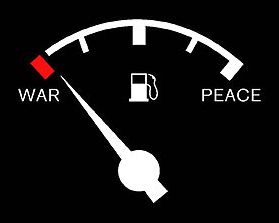


Energie verte comme alternative aux guerres du pétrole

Cela fait des années qu'Al Gore (activiste environnemental, prix Nobel et précédent vice président des Etats Unis) se bat pour sensibiliser le monde sur la nécessité de remplacer les combustibles fossiles par de l'énergie verte, afin de remedier les effets systémiques du réchauffement climatique. [4]

L'utilisation généralisée d'énergie verte aiderait à résoudre la crise climatique, mais aussi réduirait la dépendance du pétrole importé (et donc le besoin de nouvelles guerres du pétrole).

La semaine dernière, l'énergie verte a trouvé un supporteur inattendu. Je ne parle pas d'un pacifiste, un écologiste ou même un politicien, mais d'un des plus puissants hommes d'affaires d'Amérique. Il s'appelle Eric Schmidt et il est PDG de Google.

Le 1er octobre 2008, Eric Schmidt a présenté un plan appelé “Clean Energy 2030”, qui proposait des solutions pour réduire les émissions de CO2, améliorer la sécurité énergetique nationale, réduire les coûts de l'énergie et créer des millions de nouveaux emplois - Tout cela avec un bénéfice net de 1.000 milliards d'euros sur l'investissement initial à horizon 2030.

Voici une vidéo (en anglais) où Eric Schmidt présente cette proposition:


Réferences

[1]↑ "The secret history of 9/11" http://video.google.com/videoplay?docid=-3337932315461124693 [de la minute 84 à la minute 86] Transcription disponible sur la CBC (Canadian Broadcasting Corporation): http://www.cbc.ca/documentaries/secrethistory/timeline10.html
[2]↑ International coalition casualties: http://icasualties.org/oif/CasualtyTrends.aspx

[3]↑ Iraq Body Count: http://www.iraqbodycount.org/database/
Les chiffres d'IBC ne sont pas des estimations mais un inventaire de morts réelles et documentées. IBC enregistre uniquement les morts violentes documentées de civiles (strictement "non combatatnts"). Les données sont constamment mis à jour.

[4]↑ Le défi du vice président Al Gore "We can solve the climat crisis": http://www.wecansolveit.org/

Oct 10, 2008

Una alternativa a las guerras por el petroleo

En una entrevista para el documental "La historia secreta del 11/9", el encargado de la oficina antiterrorista en septiembre de 2001 Richard Clarke declaraba:

"En reuniones del 11 y 12 de septiembre, los oficiales del departamento de defensa, incluido el secretario Rumsfeld, empezaron a hablar sobre la necesidad de atacar a Irak. Al principio pensaba que estaban de broma pero pronto comprendi que no era así. Rumsfeld dijo: bueno sí, podríamos atacar Afganistán pero no hay demasiados objetivos que bombardear y los que hay no valen demasiado la pena. Por lo tanto deberíamos bombardear Irak, donde hay objetivos mucho mejores.

Yo no creía que hubiera ninguna conexión entre lo que había ocurrido e Irak. Eso no pareció importarles. Les dije que atacar a Irak haría más difícil obtener el apoyo que necesitábamos de la comunidad internacional y particularmente del mundo musulman. Eso no pareció importarles. [...]

El secretario Powel dijo: mirad, el mundo no va a entender que no ataquemos a Afganistán. Es de allí de donde se lanzó el ataque del 11 de septiembre. Así que, a regañadientes, durante los días siguientes, el departamento de defensa llegó al consenso de de atacar primero Afganistán. Esto es lo que el presidente aprobó, atacar a Afganistán en primer lugar. Y estaba muy claro qué sería lo segundo, y lo segundo era Irak." [1]

18 meses más tarde, Irak fue invadido por una coalición internacional liderada por los Estados Unidos. Desde entonces:
  • Más de 4.000 soldados de Estados Unidos han muerto [2]
  • Más de 33.000 soldados de Estados Unidos han sido heridos [2]
  • Se han registrado al menos 88,000 muertes violentas de civiles iraquíes [3]
Guerras por el petróleo

Cada vez son más los que creen que el principal motivo para la guerra en Irak fue asegurar el abastecimiento de petróleo de los Estados Unidos y hacer de Irak un lugar seguro –y lucrativo– para la industria petrolera estadounidense.

Los siguientes artículos encontrados en conocidos medios de comunicación refuerzan esta idea:

He aqui una carta del PNAC al presidente Clinton instándole a derrocar a Saddam Hussein para asegurar "una porción significante del abastecimiento mundial de petróleo".

El PNAC (Proyecto por un Nuevo Siglo Americano) es un grupo de neoconservadores muy influyentes, muchos de los cuales tienen intereses en el gobierno de los Estados Unidos y/o en la industria petrolera. Entre los miembros del PNAC están Jeb Bush, Dick Cheney, Dan Quayle, Donald Rumsfeld and Paul Wolfowitz. En su web oficial dejan claras sus ideas respecto a los Estados Unidos, el mundo y el petroleo.


La energía limpia como alternativa a las guerras por el petróleo

El activista medioambiental, premio Nobel y ex Vice Presidente Al Gore lleva años pidiendo la sustitución de los combustibles fósiles por energía limpia para contrarrestar los efectos del calentamiento global. [4]

El uso generalizado de energía limpia no solamente ayudaría a luchar contra el cambio climático sino que también reduciría la dependencia del petroleo importado (y por tanto la necesidad de nuevas guerras por el petróleo).

La semana pasada, la energía limpia encontró un nuevo e inesperado defensor. No se trata de un pacifista, un ecologista o un político, sino de uno de los hombres de negocios más poderosos de Estados Unidos. Su nombre es Eric Schmidt y es el presidente de Google.

El 1 de octubre de 2008, Eric Schmidt presentó un plan llamado “Clean Energy 2030”, con soluciones para reducir las emisiones de CO2, mejorar la seguridad energética nacional, reducir el coste de la energía y crear mllones de nuevos trabajos - Todo esto con un beneficio neto en el año 2030 de 1.000.000 de millones de dólares sobre la invesión inicial.

Aquí podéis ver al presidente de Google presentando este plan (en inglés):


Referencias

[1]↑ "The secret history of 9/11" http://video.google.com/videoplay?docid=-3337932315461124693 [saltar al minuto 84 hasta el minuto 86] Transcripción del documental disponible en la CBC (Canadian Broadcasting Corporation): http://www.cbc.ca/documentaries/secrethistory/timeline10.html

[2]↑ International coalition casualties: http://icasualties.org/oif/CasualtyTrends.aspx

[3]↑ Iraq Body Count: http://www.iraqbodycount.org/database/
Las cifras de IBC no son estimaciones sino el registro de muertes reales y documentadas. IBC únicamente registra muertes violentas de civiles (estrictamente no combatientes). Las cifras de IBC se actualizan constantemente según llegan nuevos datos.

[4]↑ El desafío lanzado por Al Gore "We can solve the climat crisis": http://www.wecansolveit.org/

Oct 6, 2008

An alternative to oil wars

In an interview for the documentary “The secret history of 9/11”, the chief counter-terrorism adviser in September 2001, Richard Clarke, declared:

"In meetings on September 11th and on September 12th, the defence department officials, including Secretary Rumsfeld, began talking about the need to attack Iraq. I first thought that they were kidding and it became clear that they weren't. Rumsfeld said, well yeah, we could attack Afghanistan but there aren't very many targets to bomb in Afghanistan and they're not worth very much. So we should bomb Iraq where there are much better targets.

I thought there's no connection between what just happened and Iraq. That didn't seem to bother them. I said well attacking Iraq actually will make it more difficult for us to get the kinds of support we need in the world particularly in the Muslim world. That didn't seem to bother them. [...]

Secretary Powell said look the world is not going to understand if we don't go after Afghanistan. That's where the attack of September 11th was launched from. So reluctantly, during the course of the week, the defence department came around to a consensus and the consensus was called Afghanistan first. That's what the President approved, an Afghanistan first policy. It was very clear what was second, and what was second was Iraq." [1]

18 months later, Iraq was invaded by a coalition leaded by the USA. As a result,
  • More than 4,000 US soldiers have been killed [2]
  • More than 33,000 US soldiers have been wounded [2]
  • More than 88,000 iraqui civilian deaths from violence have been documented [3]
Oil wars

A growing number of people believe that the main reason for this war was to secure US petroleum supplies and to make Iraq safe –and lucrative– for the US oil industry.

Here are some articles of mainstream media reinforcing this idea:

Here is a 1998 letter of the PNAC to President Clinton urging him to remove Saddam Hussein’s regime from power in Iraq in order to secure "a significant portion of the world’s supply of oil".

The PNAC (Project for the New American Century) is a group of highly influential neo-conservatives, many of whom have interests in the USA government and/or the oil industry. Among their members are Jeb Bush, Dick Cheney, Dan Quayle, Donald Rumsfeld and Paul Wolfowitz. On their website they make it very clear their attitudes to the USA, the world and oil.


Green energies as an alternative to oil wars

Environmental activist, Nobel laureate and former Vice President Al Gore has been calling for years for a move towards replacing a dependence upon "carbon-based fuels" with green energy, in order to provide a remedy to the systemic effects of global warming. [4]

The generalised use of green energy would not only help solving climate crisis but it would also reduce the dependence on imported oil (and thus the need of more oil wars).

Last week, green energy found an unexpected supporter. This time it was not a pacifist, an ecologist or even a politician, but one of the most powerful businessmen in America. His name is Eric Schmidt and he is Chairman and CEO of Google.

In October the 1st, 2008, Schmidt presented a plan called “Clean Energy 2030”, proposing solutions to reduce CO2 emissions, improve the national energy security, reduce energy costs and create millions of new jobs - All that with a net benefit by 2030 of $1.0 trillion over the initial investment.

You can watch here Eric Schmidt discussing this proposal:


References

[1]↑ "The secret history of 9/11" http://video.google.com/videoplay?docid=-3337932315461124693 [from 1:24h to 1:26h] See transcript at CBC (Canadian Broadcasting Corporation): http://www.cbc.ca/documentaries/secrethistory/timeline10.html

[2]↑ International coalition casualties: http://icasualties.org/oif/CasualtyTrends.aspx

[3]↑ Iraq Body Count: http://www.iraqbodycount.org/database/
IBC’s figures are not ‘estimates’ but a record of actual, documented deaths. IBC records solely violent deaths. IBC records solely civilian (strictly, ‘non-combatant’) deaths. IBC’s figures are constantly updated and revised as new data comes in, and frequent consultation is advised.

[4]↑ Al Gore's challenge "We can solve the climat crisis": http://www.wecansolveit.org/

Sep 21, 2008

Est-ce que les ordres tiennent toujours?

Un témoignage dérangeant

Norman Mineta était le Sécretaire de Transport pendant les attentats du 11 septembre. Son témoinage devant la Commission du 11 septembre contredit le rapport de la Commission, révélant le fait que le Vice Président Dick Cheney savait qu'un avion kidnappé se dirigeait vers le Pentagone bien avant que ce qui est indiqué dans le rapport de la Commission.

Selon Mineta, Cheney avait connaissance d'un avion se dirigeant vers le Pentagone vers 9h27, alors que la Commission du 11 septembre affirme que l'armée Américaine n'a pas été informé de cet avion jusqu'à 9h34. Cette discrépance est significative, car les avions de chasse envoyés dès la base de Langley pourraient avoir intercepté l'avion qui a frappé le Pentagone si l'armée Américaine avait été prévenue à 9h27 au lieu d'à 9h34 [1].

“... lorsque l'avion s'approchait du Pentagone. Il y avait d'ailleurs un jeune homme qui venait régulièrement informer le vice président, "L'avion est à 50 milles. L'avion est à 30 milles." Et lorsqu'il a indiqué, "L'avion est à 10 milles", le jeune homme a interrogé le vice président, "Est-ce que les ordres tiennent toujours ?" Le vice président s'est alors vivement tourné vers lui et lui a répondu, "Bien sur que les ordres tiennent toujours. Avez-vous entendu quoi que ce soit qui vous laisse croire le contraire ?” [2]

Mineta a interprété, de par son expérience à l'armée, que les ordres auxquelles Cheney faisait référence étaient des ordres d'abattre l'avion. Mais cela aurait voulu dire que Cheney avait donné son accord pour abattre l'avion avant 9h27, alors que d'après le rapport de la Commission cet ordre n'a pas été donnée qu'à 10h25. [3]

Quelques personnes critiques avec la version officielle ont par conséquent suggéré que ces ordres n'étaient pas des ordres pour abattre l'avion, mais bien au contraire des ordres pour NE PAS l'abattre et le laisser s'écraser contre le Pentagone, provoquant la mort de 125 employés. [voir lecture approfondie]

La dissimulation de la Commission du 11 septembre

Le témoignage de Mineta n'a même pas été cité dans le rapport final de la Commission du 11 septembre, et ses polémiques déclarations ont même été effacées du vidéo de sa déclaration à la Commission. [4]

Ces omissions prouvent que la Commission du 11 septembre, loin de vouloir donner l'explication la plus complète du 11 septembre, poursuivait tout simplement donner une légitimité à la version fournie par l'Administration Bush et le Pentagone.

Critiques au témoignage de Mineta

Les défenseurs de la version officielle ont essayé de mettre en cause la crédibilité de Mineta, disant qu'il s'est trompé avec les heures données ou qu'en fait la conversation qu'il a écouté ne portait pas sur le vol 77 (l'avion qui a frappé le Pentagone à 9h37) mais sur le vol 93 (l'avion qui s'est écrasé plus tard en Pennsylvanie).

Ce dernier argument ne tient pas la route, du fait que le vol 93 s'est écrasé à une distance de 125 milles de Washington D.C., et en conséquence, n'a jamais pu être "à 50 milles" de la Maison Blanche ou du Pentagone.

Par rapport au premier argument, il faut dire que les heures données par Mineta sont soutenues par Richard Clarke (coordinateur national pour le contre-terrorisme). Clarke précise que Mineta a joint Cheney au Centre Présidentiel d'Opérations d'Emergence (PEOC) avant 9h28. Il maintient aussi que Cheney était au PEOC bien avant 9h28. [5]

Pourtant, le rapport de la Commision du 11 septembre défend que Cheney n'est pas arrivé au PEOC jusqu'à 9h37 (au moment que l'avion s'écrasait contre le Pentagone), acceptant une déclaration du Service Secret qui n'a pas pu être vérifiée car les données sur lesquelles se basait n'étaient plus disponibles. [6]

Le changement de la version officielle de l'armée

La version initiale de l'armée (du 18 septembre 2001) n'entrait pas en conflit avec les heures données par Mineta dans sa déclaration. Pendant presque deux ans, le Commandement de la Défense Aérospatiale de l'Amérique du Nord (NORAD) a soutenu qu'il avait été prévenu de l'enlèvement du vol 77 à 9h24, envoyant immédiatement des avions de chasse pour intercepter l'avion kidnappé. [7]

Or, lorsque NORAD a déclaré devant la Commission du 11 septembre, il a présenté une nouvelle version, d'après laquelle il n'a été informé du vol 77 qu'à 9h34. La Commission du 11 septembre n'a pas voulu clarifier pourquoi l'armée avait soutenu une version si différente pendant 20 mois; elle s'est limité à l'accepter comme bonne et à omettre les témoignages contradictoires avec cette nouvelle version, y compris celui de Norman Mineta.

Lecture approfondie

Les articles suivants analysent en profondeur les implications du témoignage de Norman Mineta et en tirent comme conclusion que les ordres de Cheney étaient en réalité des ordres pour ne pas abattre l'avion.

John C. Ekonomou. "Mineta, Cheney and the orders still stand@ controversy". http://www.journalof911studies.com/letters/OrderRegardingAA77HittingPentagonOn911.pdf

Adam Letalik. "Norman Mineta and Richard Clarke Contradict the 9/11 Commission Report": http://www.journalof911studies.com/letters/AdamMinetaClarkePaper.pdf

Références

[1]↑ David Ray Griffin. "Flights 11, 175, 77, and 93: The 9/11 Commission's Incredible Tales". http://www.911truth.org/article.php?story=20051205150219651 (rechercher le texte "NORAD's explanation of its failure to protect the Pentagon")

[2]↑ Transcription complète du témoignage de Norman Mineta: http://govinfo.library.unt.edu/911/archive/hearing2/9-11Commission_Hearing_2003-05-23.htm (rechercher le texte "do the orders still stand")

[3]↑ Rapport de la Commission du 11 septembre, chapitre 1: http://govinfo.library.unt.edu/911/report/911Report_Ch1.htm (rechercher le texte "authority to shoot down aircraft")

[4]↑ Archive de vidéo de la Commission du 11 septembre où la part concernant les ordres de Cheney a été supprimée: http://govinfo.library.unt.edu/911/archive/hearing2/index.htm (le vidéo of "Day Two: Friday, May 23, 2003, Panel 1" commence après les polémiques déclarations de Mineta: rechercher le texte "MR. LEHMAN: Mr. Secretary" dans la transcription)

[5]↑ Richard Clarke. "Against all enemies: Inside America’s War on Terror". 2004. pp 77. http://www.amazon.com/exec/obidos/ASIN/0743260244/centerforcoop-20 Extrait disponible ici: http://www.journalof911studies.com/letters/AdamMinetaClarkePaper.pdf (rechercher le texte "Richard Clarke’s Book:")

[6]↑ Notes du rapport de la Commission du 11 septembre: http://www.9-11commission.gov/report/911Report_Notes.htm (rechercher le texte "Secret Service personnel told us")

[7]↑ Version archivée du contenu du site oficiel du NORAD au 8 août 2003: http://web.archive.org/web/20030809155434/http:/www.norad.mil/index.cfm?fuseaction=home.news_rel_09_18_01 (il s'agit de la version stockée d'une page qui n'est plus disponible dans le site original. Voir http://en.wikipedia.org/wiki/Web_archive pour plus de détails sur l'archivage web)

¿Siguen siendo válidas las órdenes?

Un testimonio perturbador

Norman Mineta era Secretario de Transporte durante los ataques del 11 de septiembre. Su testimonio ante la Comisión de Investigación del 11-S contradice el informe de dicha Comisión, revelando que el Vice Presidente Dick Cheney supo que el avión secuestrado se dirigía al Pentágono mucho antes de lo indicado en el informe.

Según Mineta, Cheney supo que un avión se dirigía al Pentágono sobre las 9:27, mientras que según el informe de la Comisión de Investigación, el ejército no recibió información sobre dicho avión hasta las 9:34. Estos 7 minutos de diferencia son importantes, ya que los cazas que partieron de la base de Langley podrían haber interceptado al avión que se dirigía al Pentágono si el ejército hubiera tenido conocimiento del avión a las 9:27 en lugar de a las 9:34 [1].

“… cuando el avión se dirigía al Pentágono. Había un joven que se acercó y le dijo al Vice Presidente: "El avión está a 50 millas. El avión está a 30 millas". Y cuando llegó a "El avión está a 10 millas", el joven dijo también al Vice Presidente: "¿siguen siendo válidas las órdenes?". Y el Vice-Presidente se dio la vuelta, torciendo bruscamente el cuello y dijo "por supuesto que las órdenes siguen siendo válidas. ¿Acaso escuchaste lo contrario?"” [2]

Mineta dedujo por su experiencia en el ejército que las órdenes a las que Cheney se refería eran las de derribar el avión. Esta interpretación presuponía que Cheney había autorizado el derribo del avión antes de las 9:27. Sin embargo, dicha orden no fue dada hasta después de las 10:25, según el informe de la Comisión de Investigación del 11-S. [3]

Teniendo en cuenta esto, algunas personas que critican la versión oficial han sugerido que dichas órdenes no eran en realidad órdenes para derribar al avión que se dirigía al Pentágono sino órdenes para NO derribarlo y dejar que se estrellara contra el Pentágono, causando la muerte de 125 empleados. [leer más sobre el tema]

El encubrimiento de la Comisión de Investigación

El testimonio de Mineta no fue ni siquiera mencionado en el informe final de la Comisión, y sus polémicas declaraciones han sido incluso borradas del archivo de vídeo de la Comisión de Investigación. [4]

Estas omisiones dejan claramente ver que la verdadera misión de la Comisión de Investigación no era dar la más completa explicación sobre el 11-S sino respaldar la versión de la Administración Bush y del Pentágono.

Críticas a las declaraciones de Mineta

Los defensores de la versión oficial del 11-S han tratado de quitar crédito a las declaraciones de Mineta, sugiriendo que se equivocó con las horas o que interpretó que Cheney hablaba del vuelo 77 (el que se estrelló contra el Pentágono a las 9:37) cuando en realidad estaba refiriéndose al vuelo 93 (el que se estrelló más tarde en Pensilvania).

Este último argumento no tiene ninguna lógica, ya que el vuelo United 93 se estrelló a 125 millas de Washington D.C., y por lo tanto no pudo estar "a 50 millas" de la Casa Blanca ni del Pentágono.

Respecto al primer argumento, cabe señalar que las horas señaladas por Mineta concuerdan perfectamente con el testimonio de Richard Clarke (el encargado de la oficina antiterrorista). Clarke indica claramente que Mineta se unió a Cheney en el Centro Presidencial de Operaciones de Emergencia (PEOC) antes de las 9:28. Clarke también sitúa a Cheney en el PEOC desde mucho antes de las 9:28. [5]

Sin embargo, el informe de la Comisión de Investigación indica que Cheney no llegó al PEOC hasta las 9:37 (la hora en la que el avión se estrelló contra el Pentágono), considerando como válida una declaración de los Servicios Secretos que no pudo ser verificada porque los datos en los que se basaba ya no estaban disponibles. [6]

El cambio de la historia oficial del Ejército

Desde el 18 de septiembre de 2001, la versión del Ejército concordaba con las horas indicadas por Mineta. Durante casi dos años, el Comando de Defensa del Espacio Aéreo Norteamericano (NORAD) sostuvo que fue avisado de la pérdida del vuelo 77 a las 9:24, y que inmediatamente había mandado cazas tras el avión secuestrado. [7]

Sin embargo, el NORAD dio una nueva versión de los hechos al declarar ante la Comisión de Investigación. Según esta nueva versión, no se les informó de la pérdida del vuelo 77 hasta las 9:34. La Comisión de Investigación no quiso aclarar por qué el ejército había sostenido durante 20 meses una versión diferente, y simplemente se limitó a omitir del informe final todos los testimonios contradictorios con esta nueva versión, incluido el de Norman Mineta.

Leer más

Estos dos artículos (en inglés) analizan en profundidad las implicaciones del testimonio de Mineta, llegando a la conclusión de que las órdenes a las que Mineta hace referencia eran en realidad órdenes de no derribar al avión que se estrelló contra el Pentágono.

John C. Ekonomou. "Mineta, Cheney and the orders still stand@ controversy". http://www.journalof911studies.com/letters/OrderRegardingAA77HittingPentagonOn911.pdf

Adam Letalik. "Norman Mineta and Richard Clarke Contradict the 9/11 Commission Report": http://www.journalof911studies.com/letters/AdamMinetaClarkePaper.pdf

Referencias

[1]↑ David Ray Griffin. "Flights 11, 175, 77, and 93: The 9/11 Commission's Incredible Tales". http://www.911truth.org/article.php?story=20051205150219651 (buscar el texto "NORAD's explanation of its failure to protect the Pentagon")

[2]↑ Transcripción completa del testimonio de Norman Mineta: http://govinfo.library.unt.edu/911/archive/hearing2/9-11Commission_Hearing_2003-05-23.htm (buscar el texto "do the orders still stand")

[3]↑ Informe de la Comisión de Investigación del 11-S, capítulo 1: http://govinfo.library.unt.edu/911/report/911Report_Ch1.htm (buscar el texto "authority to shoot down aircraft")

[4]↑Archivo de video de la Comisión de Investigación, del que se han suprimido las conflictivas declaraciones de Norman Mineta: http://govinfo.library.unt.edu/911/archive/hearing2/index.htm (el vídeo de "Day Two: Friday, May 23, 2003, Panel 1" empieza tras dichas declaraciones, concretamente en el texto: "MR. LEHMAN: Mr. Secretary" de la transcripción)

[5]↑ Richard Clarke. "Against all enemies: Inside America’s War on Terror". 2004. pp 77. http://www.amazon.com/exec/obidos/ASIN/0743260244/centerforcoop-20 Extracto disponible en : http://www.journalof911studies.com/letters/AdamMinetaClarkePaper.pdf (buscar el texto "Richard Clarke’s Book:")

[6]↑ Notas del informe de la Comisión de Investigación del 11-S: http://www.9-11commission.gov/report/911Report_Notes.htm (buscar el texto "Secret Service personnel told us")

[7]↑ Versión archivada del contenido del 8 de agosto de 2003 del sitio oficial del NORAD: http://web.archive.org/web/20030809155434/http:/www.norad.mil/index.cfm?fuseaction=home.news_rel_09_18_01 (se trata de una versión cacheada de una página que ya no está disponible en el sitio original. Ver http://en.wikipedia.org/wiki/Web_archive para más información acerca del archivo de páginas web)

Sep 20, 2008

Do the orders still stand?

A disturbing testimony

Norman Mineta was the Secretary of Transport during the 9/11 attacks. His testimony before the 9/11 Commission contradicts the 9/11 Commission Report by revealing the fact that Vice President Dick Cheney knew about the aircraft approaching the Pentagon long before the 9/11 Commission Report declared.

According to Mineta, Cheney knew about an aircraft approaching the Pentagon at around 9:27 yet the 9/11 Commission Report claims that the US Military was only informed that the flight was missing at 9:34. This time discrepancy is significant because the Langley fighters could have intercepted the plane approaching the Pentagon if the US Military had been aware of the plane at 9:27 instead of 9:34 [1].

“… during the time that the airplane coming into the Pentagon. There was a young man who had come in and said to the vice president, "The plane is 50 miles out. The plane is 30 miles out." And when it got down to, "The plane is 10 miles out," the young man also said to the vice president, "Do the orders still stand?" And the vice president turned and whipped his neck around and said, "Of course the orders still stand. Have you heard anything to the contrary?"” [2]

Mineta assumed from his experience in the Military that the orders Cheney was refering to were shoot-down orders. This interpretation would imply that Cheney had given shoot-down authorization at some time before 9:27. But this order was not given before 10:25, according to the 9/11 Commission Report. [3]

Some critics of the official account have suggested, therefore, that the famous "orders still stand" weren't in fact orders to have the plane shot down, but orders NOT to shoot it down prior to it hitting the Pentagon, having 125 employees killed as a result. [see further reading]

9/11 Commission Coverup

Mineta’s account was released in the 9/11 Commission’s staff report in May 2003, but this account is not included, or even mentioned, in the Commission’s final report. The controversial part of Mineta's testimony has even been suppressed from the video archive of the 9/11 Commission. [4]

This omissions provide rather clear evidence that the Commission’s real mission was not to provide the fullest possible account of 9/11 but to defend the account provided by the Bush administration and the Pentagon.

Criticism of Mineta's testimony

Defenders of the official story have tried to discredit Mineta by saying that he got his times mixed up or that actually the conversation he overheard was not about flight 77 (the plane that crashed against the Pentagon at 9h37) but instead about flight 93 (the plane that crashed later in Pensilvania).

Concerning this last claim, Cheney and his assistant couldn't have been talking about United 93 since it crashed approximately 125 miles away from Washington D.C., and therefore, it was never “50 miles out” of the White House, Pentagon, or any other specific target.

Concerning the first claim, it is to point out that Richard Clarke (the chief counter-terrorism adviser) confirms Mineta’s timeline. He clearly states that Mineta joined Cheney in the PEOC (Presidential Emergency Operations Center) before 9:28. He also explains that Cheney would have definitely been in the PEOC well before 9:28. [5]

However, the 9/11 Commission Report places Cheney in the PEOC only at 9h37, coinciding with the Pentagon Strike. The only hard evidence of that entry time cannot be verified (according to the Secret Service, “this time was based on alarm data, which is no longer retrievable”). [6]

The changing official story of the Military’s response

Since September 18th, 2001 and for nearly two years, the US Military oficial version didn't contradict Mineta's timeline. The North American Aerospace Defense Command (NORAD) stated that they had been notified of flight 77 at 9:24, immediately scrambling their fighters afther the hijacked plane. [7]

When the 9/11 Commission revised the new Military’s timeline (according to which NORAD was only informed that the flight was missing at 9:34) it made no attempt to adequately explain how the earlier timelines were so inaccurate, and the Final Report completely omitted contradicting testimony, including Norman Mineta’s.

Further reading

These two articles analyse thoroughly the implications of Mineta's testimony, concluding that the "orders still stand" were actually stand down orders.

John C. Ekonomou. "Mineta, Cheney and the orders still stand@ controversy". http://www.journalof911studies.com/letters/OrderRegardingAA77HittingPentagonOn911.pdf

Adam Letalik. "Norman Mineta and Richard Clarke Contradict the 9/11 Commission Report": http://www.journalof911studies.com/letters/AdamMinetaClarkePaper.pdf

References

[1]↑ David Ray Griffin. "Flights 11, 175, 77, and 93: The 9/11 Commission's Incredible Tales". http://www.911truth.org/article.php?story=20051205150219651 (search for the text "NORAD's explanation of its failure to protect the Pentagon")

[2]↑ Full transcript of Norman Mineta's testimony: http://govinfo.library.unt.edu/911/archive/hearing2/9-11Commission_Hearing_2003-05-23.htm (search for the text "do the orders still stand")

[3]↑ 9/11 Commission Report, chapter 1: http://govinfo.library.unt.edu/911/report/911Report_Ch1.htm (search for the text "authority to shoot down aircraft")

[4]↑ 9/11 Commission video archive of Norman Mineta's testimony, where the "orders still stand" part has been edited out: http://govinfo.library.unt.edu/911/archive/hearing2/index.htm (the video of "Day Two: Friday, May 23, 2003, Panel 1" starts after the polemic statements of Mineta: search for the text "MR. LEHMAN: Mr. Secretary" in the transcript)

[5]↑ Richard Clarke. "Against all enemies: Inside America’s War on Terror". 2004. pp 77. http://www.amazon.com/exec/obidos/ASIN/0743260244/centerforcoop-20 Extract available at: http://www.journalof911studies.com/letters/AdamMinetaClarkePaper.pdf (search for the text "Richard Clarke’s Book:")

[6]↑ 9/11 Comission Report Notes: http://www.9-11commission.gov/report/911Report_Notes.htm (search for the text "Secret Service personnel told us")

[7]↑ Web archived version (August 8th, 2003) of NORAD official site: http://web.archive.org/web/20030809155434/http:/www.norad.mil/index.cfm?fuseaction=home.news_rel_09_18_01 (note that it is a cached version of a page that doesn't exist anymore in the original site. See http://en.wikipedia.org/wiki/Web_archive for more information about web archiving)